Historic architecture and coastal humidity make Lowcountry dwellings uniquely vulnerable to rodent infiltration. Roof rats native to maritime tree canopies readily traverse overhanging live oaks to breach louvered…
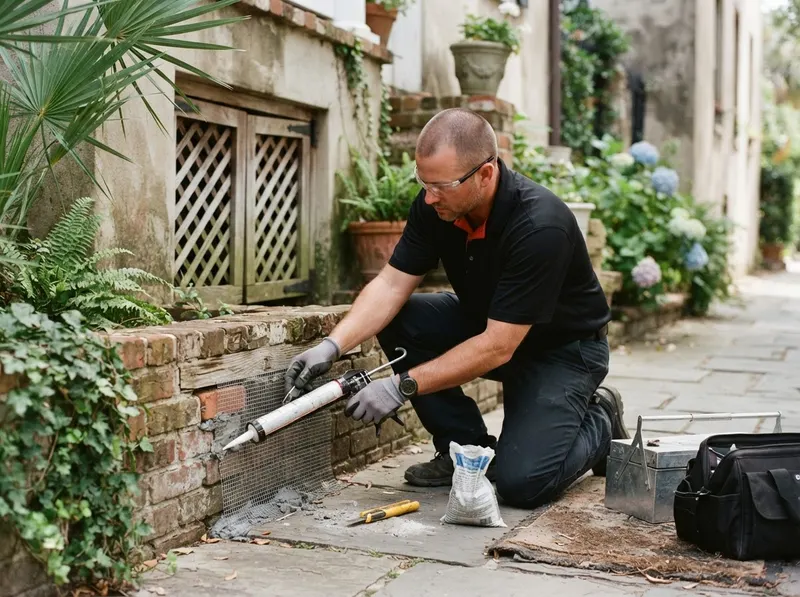
Historic architecture and coastal humidity make Lowcountry dwellings uniquely vulnerable to rodent infiltration. Roof rats native to maritime tree canopies readily traverse overhanging live oaks to breach louvered attic vents, soffit corners, and roof junctions. In neighborhoods such as South of Broad, Harleston Village, and Radcliffeborough, aging mortar between historic Charleston brickwork frequently erodes, leaving entry gaps larger than 1/4 inch. Rodent exclusion resolves this root problem mechanically rather than relying on exterior rodenticide bait stations, which pose secondary poisoning hazards to local marsh raptors and leave deceased pests inside inaccessible wall cavities.
Structural exclusion focuses directly on physical vulnerabilities common to coastal foundations. Ground-level raised pier foundations in Hampton Park Terrace, Wagener Terrace, and West Ashley expose subflooring plumbing penetrations and crawlspace access doors. Unsealed crawlspace vents, HVAC chases, and gaps beneath historic wood siding allow rodents direct runways into floor joists. Technicians measure and cap every access point using heavy-gauge metal flashing, non-corroding copper mesh, and concrete-anchored 1/4-inch hardware cloth that chewing incisors cannot penetrate.
Selecting structural exclusion over recurring chemical baiting represents an upfront mechanical trade-off. Poison stations offer a lower initial dispatch expense but require indefinite quarterly contract fees without preventing outdoor rodents from continuing to enter living quarters. Comprehensive structural exclusion demands a larger single investment starting at the $250 minimum, yet it creates a permanent physical barrier. For raised cottages on James Island or newer construction along tidal waterways on Daniel Island, coupling complete perimeter sealing with dedicated indoor trapping delivers long-term population reduction without introducing persistent poisons into damp coastal air.
Every job gets a firm, written price after a free on-site visit.
Tell us about your rodent trapping and structural exclusion job in Charleston and we'll send a clear, written quote, usually the same day.
 Coastal Wren Pest Control