Operating a commercial kitchen in downtown Charleston means managing high heat, constant plumbing run-off, and historic masonry that borders coastal marshlands. Restaurants along East Bay Street, bed-and-breakfast prep…
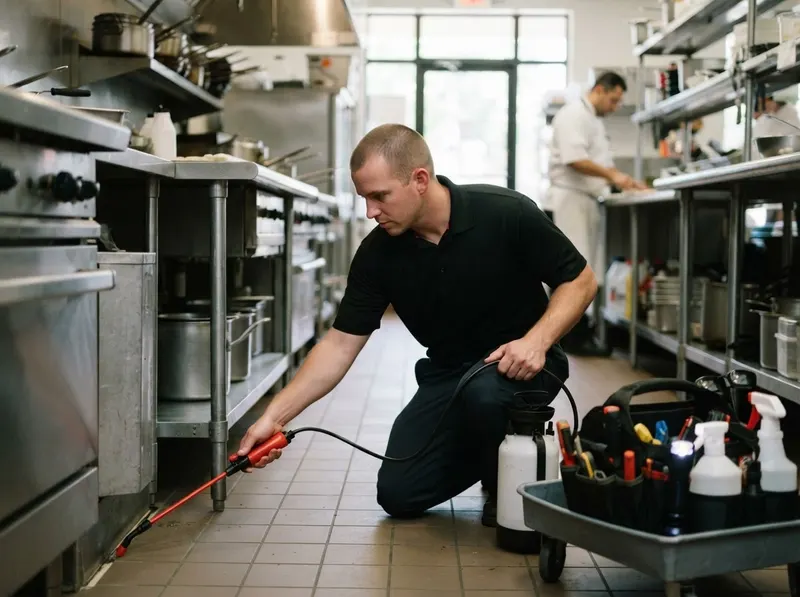
Operating a commercial kitchen in downtown Charleston means managing high heat, constant plumbing run-off, and historic masonry that borders coastal marshlands. Restaurants along East Bay Street, bed-and-breakfast prep kitchens in Harleston Village and South of Broad, and bakeries in Radcliffeborough face pressure from German cockroaches seeking compressor motor housing and phorid flies breeding inside organic floor drain residue. Standard surface sprays fail in these settings because wash-down cycles rinse insecticides into floor sinks, while excessive moisture neutralizes standard dusts. Food facility management requires insect growth regulators (IGRs), probiotic foam applications in grease lines, and non-volatile gel baits placed precisely along structural framing, stainless steel splash guards, and hollow equipment legs.
Facilities outside peninsular Charleston encounter different structural challenges. Kitchens in James Island strip centers, Daniel Island corporate dining halls, and West Ashley catering facilities often feature slab foundations where plumbing penetrations create subterranean entryways for American roaches and rodents. In historic dining spaces near Wagener Terrace and Hampton Park Terrace, raised pier foundations allow moist outdoor air to drift beneath walk-in coolers, creating condensation zones that draw moisture-dependent pests. Choosing monthly structural remediation over reactionary spray-down visits stops infestations at harbor points. The operational trade-off requires staff cooperation on nightly sanitation protocols, such as cleaning under cook lines and eliminating standing rinse water, to ensure non-repellent baits remain the primary food source for target pests.
Commercial facility pest management works through four systematic steps: 1. A technician completes a non-invasive visual inspection using high-lumen mirrors to check compressor compartments, suspended ceiling tiles, dish machine perimeters, and floor drains. 2. Staff apply non-pesticidal microbial foam into drain lines to digest the gelatinous organic scum where drain flies nest. 3. Technicians place tamper-resistant bait stations and discreet insect monitors behind prep tables, electrical chases, and dry storage shelving. 4. A comprehensive regulatory report logs all findings, pesticide registrations, and facility remediation notes directly into an on-site service binder for health inspection verification.
Every job gets a firm, written price after a free on-site visit.
Tell us about your commercial kitchen and facility pest control job in Charleston and we'll send a clear, written quote, usually the same day.
 Coastal Wren Pest Control